
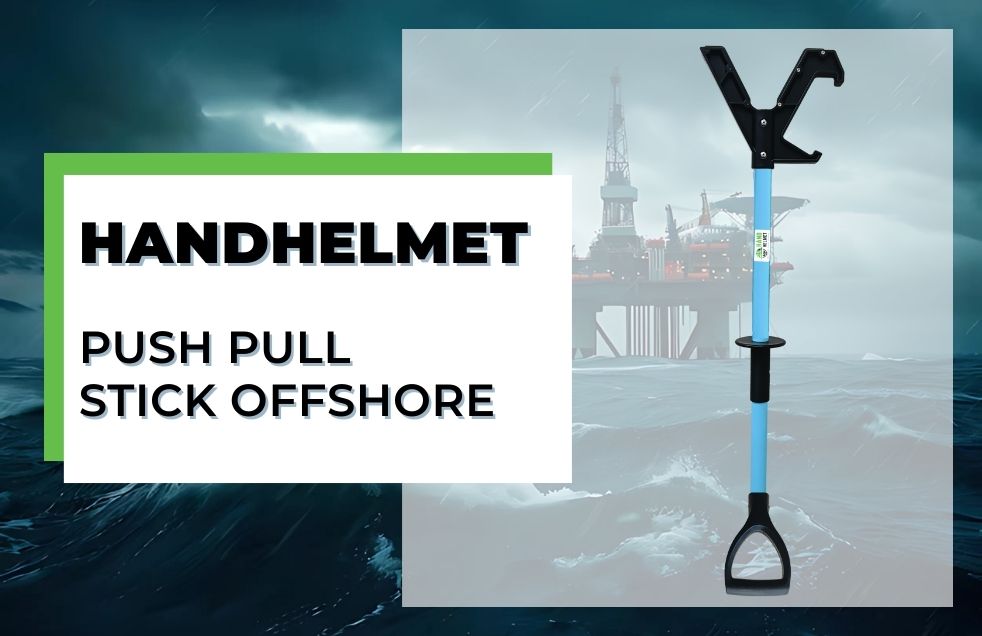
HandHelmet Push Pull Stick Offshore Engineered for Extreme Offshore Safety
Introduction Safety at Sea Starts with the Right HandHelmet Push Pull Stick Offshore
Offshore operations are some of the most challenging and hazardous working environments on Earth. Far from the stability of land-based facilities, offshore installations whether oil rigs, FPSOs, or wind farms are subjected to relentless forces of nature. Strong winds, powerful waves, salt spray, and fluctuating temperatures test both human endurance and equipment durability.
In such a high-stakes environment, every single tool used must not only be effective but also engineered with safety as the top priority. This is where the HandHelmet Push Pull Stick Offshore comes in a tool designed to protect workers from one of the most common yet serious risks offshore hand and finger injuries during load handling.
By enabling hands-free load guidance, the HandHelmet Push Pull Stick Offshore keeps workers out of the danger zone while still allowing precise control over moving objects in even the roughest sea states.
The Offshore Environment Why the HandHelmet Push Pull Stick Offshore Is Necessary
Offshore environments are dynamic, with multiple variables making load handling particularly dangerous. Understanding these factors explains why a HandHelmet Push Pull Stick Offshore is not just useful but essential.
Offshore Industry Sectors That Rely on the HandHelmet Push Pull Stick Offshore:
- Oil & Gas Exploration and Production – Drilling platforms, semi-submersibles, jack-up rigs, drillships, and FPSOs where heavy tubulars, drill pipes, and BOPs are constantly moved.
- Offshore Wind Energy – Installation and maintenance of wind turbines, nacelles, and high-voltage substations where safety clearances are critical.
- Subsea Construction & Maintenance – Deployment of ROVs, umbilical and riser installations, pipelaying, and cable handling.
- Marine Support Vessels – Anchor handling tug supply (AHTS) vessels, crane barges, and construction support ships that frequently transfer loads at sea.
Common Offshore Hazards Mitigated by the HandHelmet Push Pull Stick Offshore:
- High Winds (up to 60 knots) – Cause swinging loads and rapid movement changes.
- Wave-Induced Motion (heave, pitch, roll) – Creates unpredictable load behavior during lifts.
- Slippery Decks – Oil, seawater, and ice increase slip risks during manual handling.
- Limited Space – Confined decks and narrow walkways make safe load positioning difficult.
- Heavy Machinery – Moving winches, cranes, and hydraulic arms with high crush forces.
- Explosive Atmospheres (Zone 0, Zone 1) – Necessitate non-sparking, ATEX-certified tools like the HandHelmet Push Pull Stick Offshore.
What Is the HandHelmet Push Pull Stick Offshore?
The HandHelmet Push Pull Stick Offshore is a purpose-built, hands-free tool that allows personnel to push, pull, guide, and reposition loads from a safe distance. This keeps them out of pinch points, away from suspended loads, and outside hazardous swing paths.
Unlike traditional taglines or improvised tools, the HandHelmet Push Pull Stick Offshore is engineered for the marine environment—meaning it withstands saltwater corrosion, remains non-conductive in electrical hazards, and is strong enough to handle heavy compression and tensile loads.
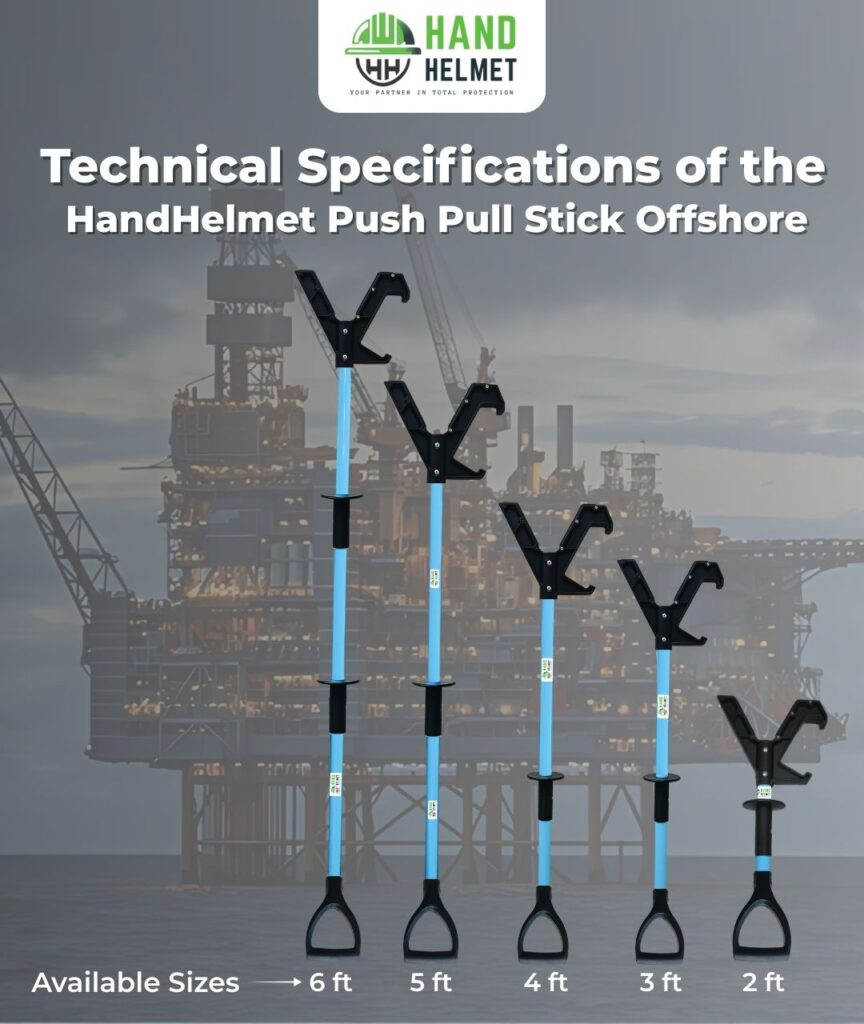
Technical Specifications of the HandHelmet Push Pull Stick Offshore
Feature | Specification |
Shaft Material | Marine-grade reinforced fiberglass – non-conductive, lightweight yet strong |
Tool Head | V-Type thermoplastic rubber – oil-resistant, UV-stable, non-marking on painted/coated surfaces |
Length Options | 2ft, 4ft, 6ft (custom manufacturing for specific offshore vessel/platform requirements) |
Compression Rating | Up to 600 lbs (270 kg) – allows pushing against heavy loads without flex failure |
Tensile Pull Rating | Up to 400 lbs (180 kg) – secure pulling of loads |
Grip Design | Neoprene high-friction sleeve – maintains grip even with wet or gloved hands |
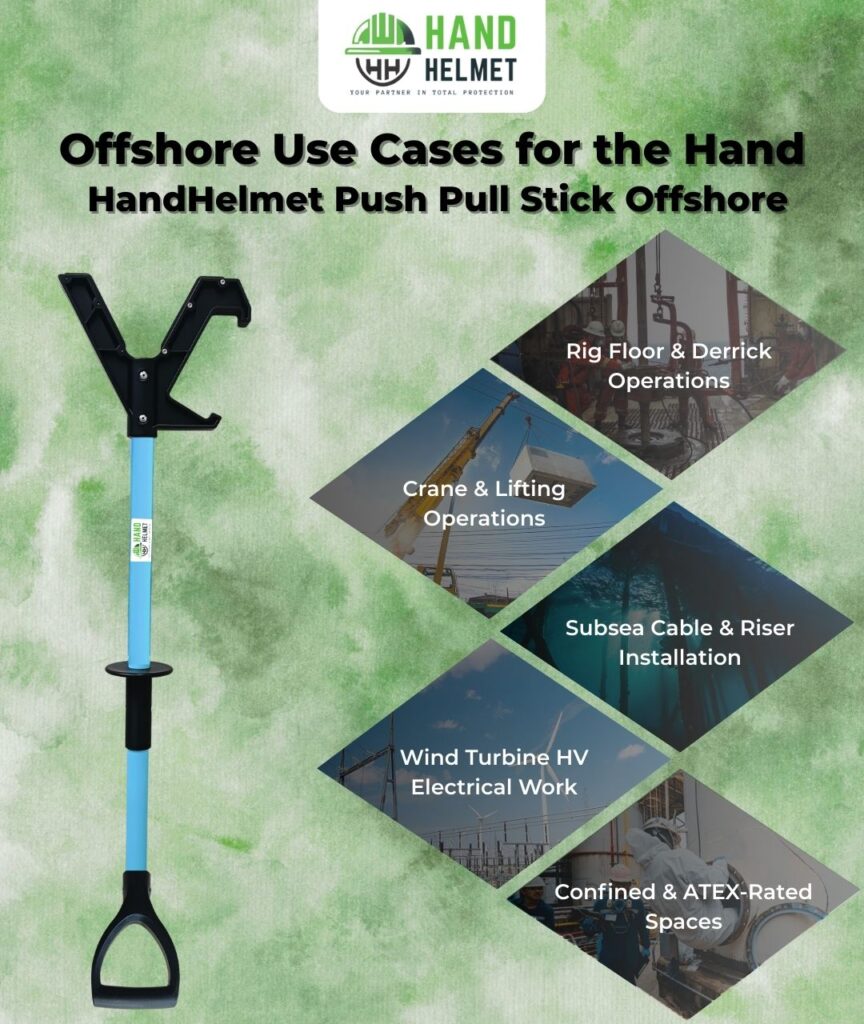
Offshore Use Cases for the HandHelmet Push Pull Stick Offshore
Rig Floor & Derrick Operations – During pipe tripping, casing runs, or BOP handling, the stick guides tubulars without exposing hands to rotary tables, slips, or tong pinch points.
Crane & Lifting Operations – Ideal for dynamic load positioning during vessel-to-platform transfers in rough seas. Prevents workers from standing in the line of fire.
Subsea Cable & Riser Installation – Helps technicians guide hoses and cables into clamps, trays, or J-tubes without direct contact—critical in corrosive, wet environments.
Wind Turbine HV Electrical Work – Non-conductive shaft ensures safety when handling grounding cables or electrical covers in high-voltage zones.
Confined & ATEX-Rated Spaces – Allows positioning of components in hazardous areas without physical entry, reducing gas exposure risks.
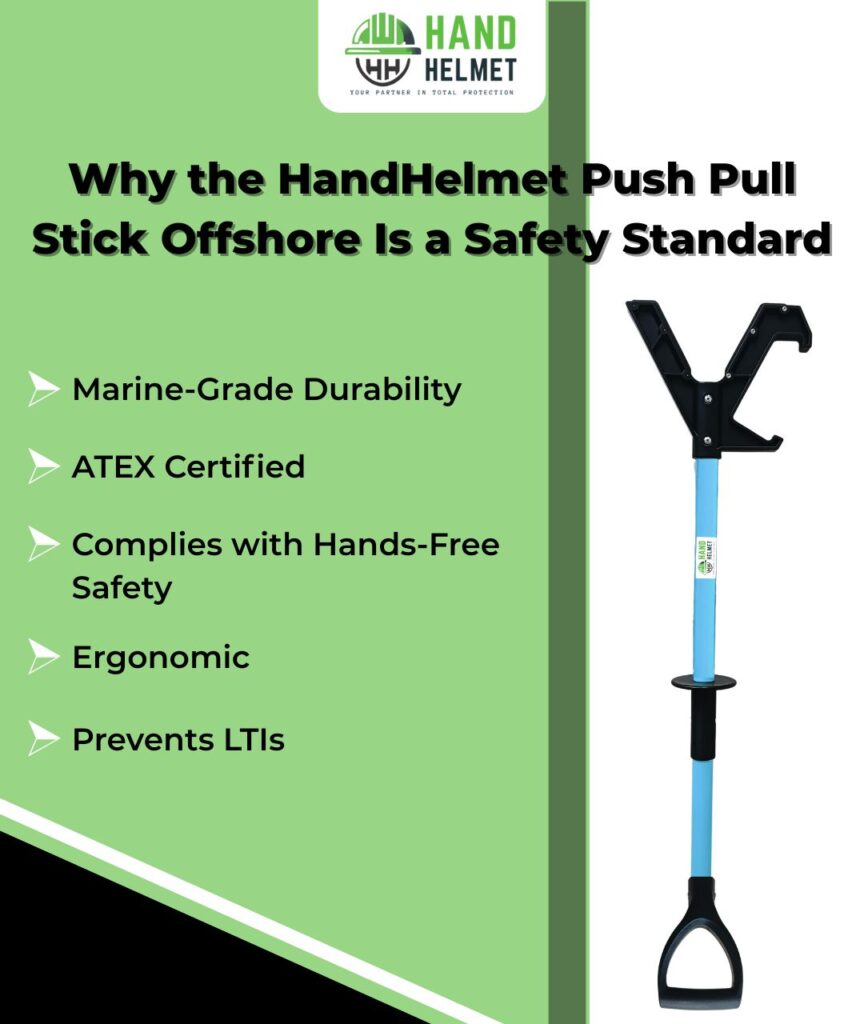
Why the HandHelmet Push Pull Stick Offshore Is a Safety Standard
- Marine-Grade Durability – Resists corrosion from salt spray and UV exposure.
- ATEX Certified – Safe for explosive environments where sparks could trigger incidents.
- Complies with Hands-Free Safety – Meets IADC and OSHA offshore handling guidelines.
- Ergonomic – Reduces back strain and fatigue during extended use.
- Prevents LTIs (Lost Time Injuries) – Addresses one of the top three injury causes in offshore operations: hand and finger trauma.
Safety Performance HandHelmet Push Pull Stick Offshore vs Traditional Handling
Safety Factor | Manual Handling | HandHelmet Push Pull Stick Offshore |
Hand Proximity to Load | High Risk | Zero Contact |
Electrical Protection | None | Full Non-Conductive Shaft |
Corrosion Resistance | Low | High – Marine Rated |
Worker Fatigue | High | Low – Ergonomic Grip & Lightweight |
Real-World Example: North Sea Jack-Up Rig
On a UK-based jack-up rig, the introduction of the HandHelmet Push Pull Stick Offshore reduced hand-related injuries by 70% in six months.
Deckhands used the tool for tubular handling, crane lifts, and equipment positioning, eliminating the need to step into red zones. This not only improved safety but also increased operational speed since fewer delays occurred from incident investigations or equipment resets.
Conclusion: The HandHelmet Push Pull Stick Offshore – Safety Engineered for the Harshest Seas
Offshore industries can’t afford unsafe equipment. The HandHelmet Push Pull Stick Offshore isn’t just another tool—it’s a lifesaving solution that supports compliance, reduces downtime, and protects your workforce from preventable injuries.
Whether your operations are in oil, gas, wind energy, or marine construction, this tool is the industry benchmark for hands-free offshore safety.
FAQs – HandHelmet Push Pull Stick Offshore
What makes the HandHelmet Push Pull Stick Offshore different from a standard push-pull stick?
The HandHelmet Push Pull Stick Offshore is specifically engineered for marine and offshore environments. It features a marine-grade fiberglass shaft, corrosion-resistant rubber head, non-sparking construction, and ATEX Zone 1 compliance—making it safe for explosive gas areas and extreme weather conditions.
Is the HandHelmet Push Pull Stick Offshore safe for use in explosive atmospheres?
Yes. The HandHelmet Push Pull Stick Offshore is 100% non-sparking and ATEX-certified for Zone 1 environments, ensuring it can be safely used in oil & gas production decks, offshore wind farms, and other hazardous areas.
Can the HandHelmet Push Pull Stick Offshore handle heavy loads?
Absolutely. It has a compression rating of up to 600 lbs (270 kg) and a tensile pull rating of up to 400 lbs (180 kg), making it suitable for guiding, pushing, and pulling heavy offshore loads without flex failure.
Is the HandHelmet Push Pull Stick Offshore resistant to saltwater corrosion?
Yes. Both the fiberglass shaft and thermoplastic rubber head are designed to resist salt spray, UV exposure, and hydrocarbon contact, ensuring long service life in offshore environments.
Can the HandHelmet Push Pull Stick Offshore be used for electrical work?
Yes. Its non-conductive fiberglass shaft makes it safe for handling objects near high-voltage equipment on offshore wind turbines, HVDC platforms, or electrical substations.
To have customised solutions to your needs. Get in contact with our safety experts.
Contact us at:
Call us : (+91) 73375 77243
Visit our website : handhelmet.com
Email us : info@handhelmet.com
For more info – HANDHELMET PUSH PULL SAFETY STICK